
Materials · Granite
Granite countertops for kitchens that actually get cooked in.
Granite is natural stone cut straight from the quarry. It handles heat better than anything else we fabricate, and no two slabs are alike. That second part is the reason to choose it, and the reason layout matters.
Granite at a glance
- Good at
- Heat, scratches and Arizona sun. It's the stone we'd put in an outdoor kitchen.
- Watch out for
- It's porous, so it needs sealing now and then, and the slab you see is the slab you get, pattern and all.
- Best for
- Kitchens that see real cooking, outdoor kitchens, and anyone who wants a stone that's one of a kind.
- Care
- Mild soap and water, wipe up oil and wine, reseal when water starts soaking in.
Why layout matters with granite
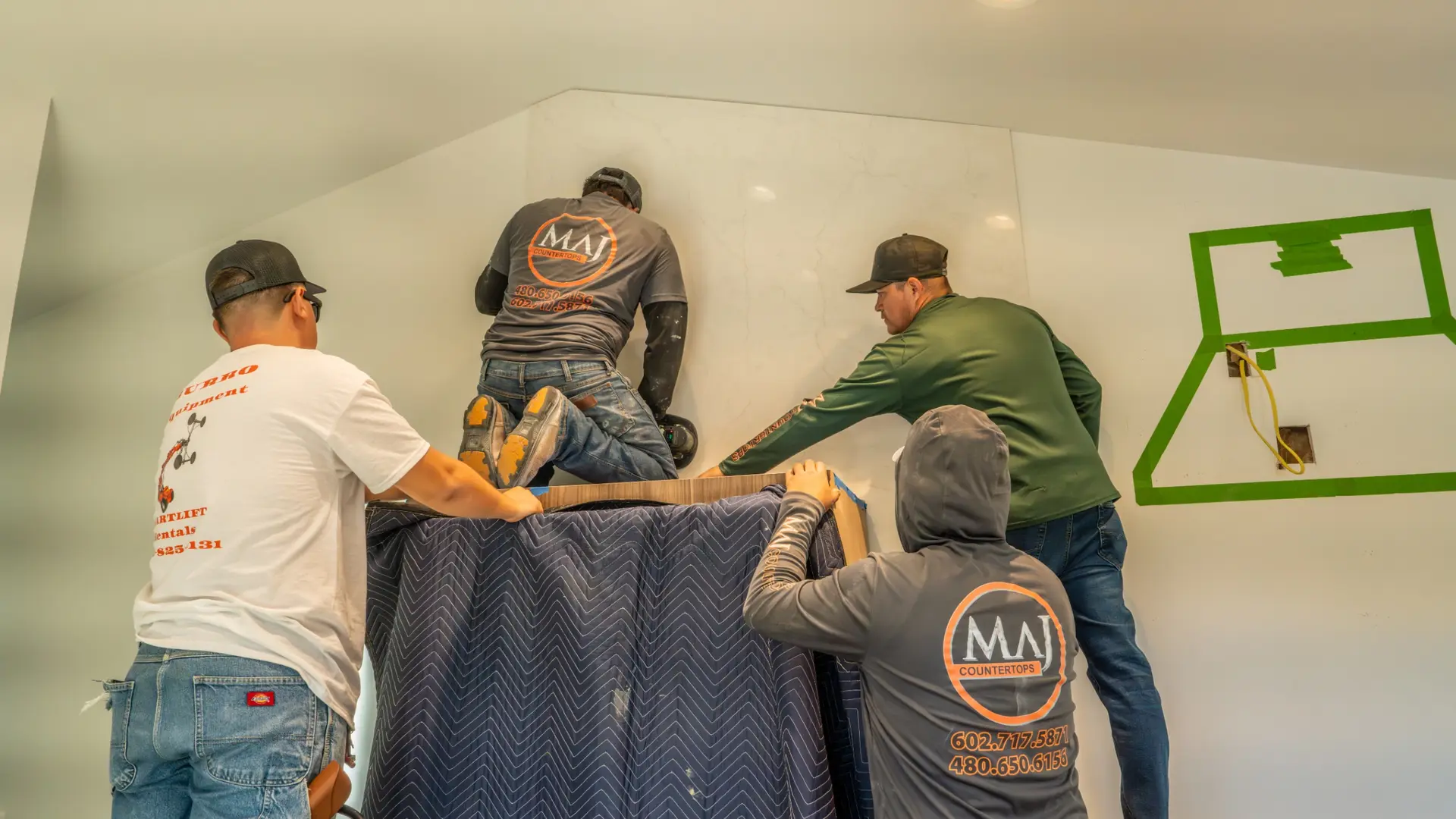
Granite has movement: veins, clusters of crystals, shifts in color across a slab. When we lay out your pieces, we decide which part of the slab becomes the island, where the seam falls and which way the pattern runs. Done right, the stone looks intentional and the seams disappear into the pattern.
That's why we ask you to pick the actual slabs, and why we'll show you the layout on big jobs before we cut.
Comparing materials? See quartz or marble and quartzite.
Questions we get
Does granite need to be sealed?
Usually, yes, every so often. Some granites are dense enough to need very little. A quick test: if water darkens the stone within a few minutes, it's time to reseal.
Is granite good for an outdoor kitchen?
It's one of the best choices for an Arizona outdoor kitchen. It handles sun and heat that would fade quartz, and it doesn't mind a hot grill tool set down for a moment.
Should I see the actual slab?
With granite, yes. Two slabs of the same name can look quite different. Choose the exact slabs at the supplier and we'll lay out the pieces on them.